How to Manage Clothing Sample Revisions Without Losing Time
KAOY
A prototype arrives with the waist still loose. This happens even though someone requested it to be smaller. The missing detail might be exactly what “smaller” meant. For private-label brands and boutique buyers, understanding how clothing sample revisions work means converting fit feedback into an agreed adjustment. This adjustment then reaches the next garment.
Why sample feedback needs one confirmed version
The upcoming prototype requires one clear set of confirmed modifications. If remarks arrive in separate emails, bring them together first. Do this before the revision begins. Resolve any conflicting demands with the people involved. Then, confirm which modifications should reach the designer and pattern maker.
The handover is crucial. Someone must translate those choices into pattern adjustments. At Kaou You Apparel, our sales representative or merchandiser collects the remarks. They then confirm these details with the buyer. Next, we prepare an internal sample instruction sheet for the designer. The designer coordinates the modifications with the pattern maker.
Buyers usually send us an updated tech pack, or TP. This document contains their remarks. We communicate primarily via email or WhatsApp. Keep the sample revision notes that apparel teams approve with the matching TP. Also, include any subsequent choices in the confirmed version.
What belongs in the revision record
A brief revision record should make it simple to identify the prototype. It should also clarify the requested modifications. Include the style, size, and sample round. Then, keep the relevant pictures and measurements together. These specific details help us confirm the requirements. We do this before updating the internal sample instruction sheet.
Record
What to include
Sample reference
Style, size, round and TP version
Observed issue
Location, fit photo and relevant measurement
Requested result
Agreed target or a question to resolve
Decision
Customer confirmation and next action
riority tags can keep vital corrections visible. They do this without making the record complex. Try these three tags when multiple people contribute:
Must change: a confirmed fit or construction correction.
Confirm first: a measurement, fabric or trim question.
Optional: a styling preference awaiting a decision.
Fit comments need a visible problem and a clear measure
Photos explain where the garment needs attention
Helpful garment fit comments describe what occurs during a fitting session. For instance, note that the neckline stands away from the body. This happens when the wearer leans forward. Then, attach a marked picture. Ask for the intended outcome. Do this before prescribing a pattern alteration you cannot verify.
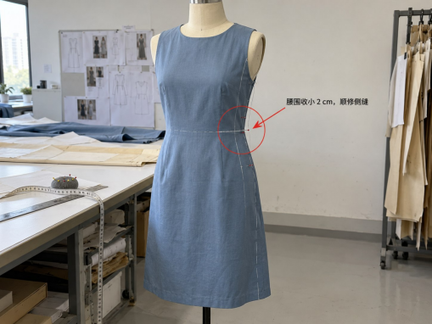
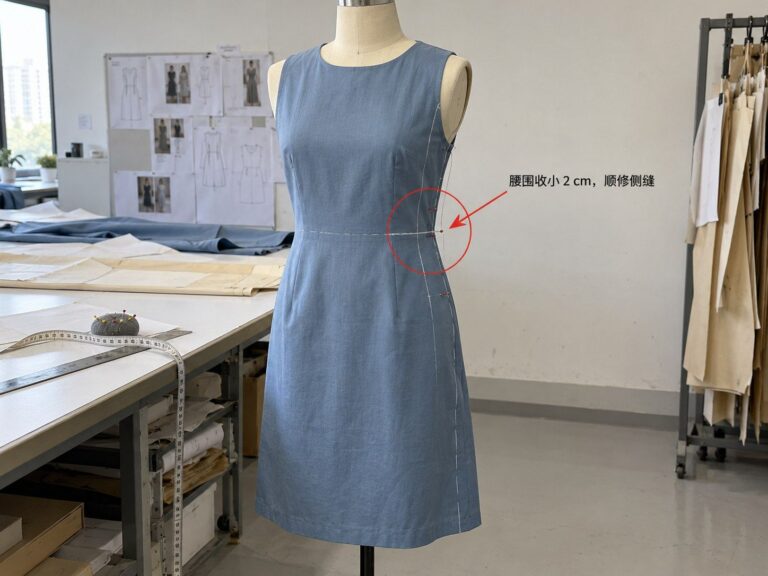
Our team favors pictures taken during a fitting on a person. We need these along with the relevant dimensions. If a remark is vague, we ask for a precise measurement. Alternatively, we clarify the effect the buyer desires. A circle or arrow helps pinpoint the issue. However, it still requires an explanation.
Flat measurements and fitting observations stay separate
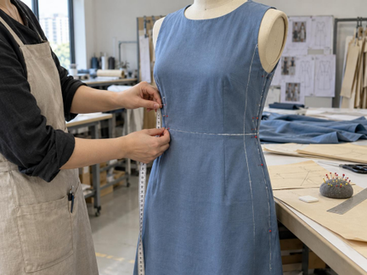
Measurement remarks require a stated basis. We ask whether the buyer means a flat garment measurement. Or, they might mean a measurement taken during fitting. If the buyer is unsure how to provide it, we explain what to measure. We confirm the requirement before executing the modification.
A demand to reduce the waist by 2 cm requires that same clarification. State the measurement method. Also, state the agreed finished target alongside the current value. A fit concern and a new design preference deserve separate notes. This is true even when both affect the waist.
How confirmed comments become the next sample
The updated sample instruction sheet becomes the active reference for the next revision. We record the requirements confirmed with the buyer. Then, we pass the document to the designer. The designer communicates with the pattern maker. They work together to put those modifications into the next prototype.
Open questions belong in the discussion. This must happen before the next prototype is created. Ask the merchandiser to confirm the response to each unresolved item. If a trim or fabric is changing, record that choice separately. This ensures it does not vanish inside a general fit remark.
Fitting and adjustment are a standard part of our work. Almost every style requires them. Our clothing sample revision process focuses on confirming the requested modifications clearly. We apply them to the next prototype. Finally, we ask the buyer to evaluate the result.
Which changes need another physical sample
Fit or fabric modifications generally require us to create another prototype. For bodycon dresses, consider the waist, neckline, and overall silhouette. Do this when reviewing the outcome. Product pictures can identify a detail. Meanwhile, the fitting allows the buyer to evaluate the revised garment on a person.
Minor issues might be confirmed through pictures. This depends on the modification. Ask us which confirmation is suitable. Do this before assuming another parcel is unnecessary. For bodycon dresses specifically, keep a visible detail approval separate. It should be distinct from the approval of the overall fit.
Revisions consume extra time. This depends on what needs to change. The buyer might change the design or fabric. If this requires a new prototype, we typically charge a new sampling fee. Confirm the time and cost for that revision. Do this before work continues.
The final sample and the instruction to begin bulk
The final fitting is a crucial step in the apparel sample development journey. After we ship the prototype, the buyer receives it. They try it on and confirm that it is acceptable. We then wait for the buyer to instruct us. This instruction tells us to begin bulk production.
The instruction sheet corresponds to the final approved prototype. It becomes the foundation for the production records. Keep that confirmed version as the reference for bulk manufacturing. If the buyer requests another modification, update the details. Reconfirm the affected details before proceeding.
A clear handover keeps revisions moving
The beneficial habit is to conclude each round with one agreed direction. Identify the prototype and explain the issue. Confirm the measurement basis. Then, carry the choice into the instruction sheet. Afterward, review the revised garment. Give a clear production instruction when it is prepared.
If you have any requirements, please contact us. Share your current sample remarks with Kaou You Apparel. This allows us to clarify the next revision.
FAQ
How do clothing sample revisions work?
The buyer reviews a prototype and sends remarks. We clarify the requirements and update the internal instruction sheet. Then, we coordinate modifications through the designer and pattern maker. Finally, the buyer checks the revised outcome.
What should sample revision notes include?
Include the sample reference, updated TP, and marked pictures. Also, include relevant measurements, the requested outcome, and unresolved questions. Keep the buyer’s confirmed choices with the version they apply to.
How to give sample revision comments to a manufacturer?
Describe the issue and the desired effect. Attach fitting pictures and define how dimensions were measured. For bodycon dresses, identify the specific area that requires attention. Do this instead of asking for a generally tighter fit.
Should every change be approved before the next sample?
Confirm the modifications that will be executed. Resolve conflicting instructions first. Ask which minor issues can be checked by picture. Also, ask which modifications require a new physical prototype.
When should clothing specifications be frozen for bulk production?
Freeze the instruction sheet that corresponds to the final approved prototype. The buyer must receive the prototype and try it on. They must confirm that it is acceptable. We then wait for the buyer’s separate instruction to begin bulk production.