A dress can feel easy to stretch in the hand and still disappoint at the fitting. The cloth may stay wider after sitting, pull back too firmly, or behave differently along its length. For a fitted collection, the useful comparison is what happens during extension and after release. Those observations help a development team discuss fit with much more precision than the word “stretchy.”
Stretch and recovery describe different behavior
Stretch is the extension of a fabric under force. Recovery describes its return toward the original dimensions after that force is removed. Growth is the extension that remains. A fabric recovery test therefore asks a different question from a quick pull across a swatch.
Direction belongs in that explanation. Crosswise stretch runs across the fabric; lengthwise stretch runs along it. A material described as four-way stretch can extend in both directions, but that description alone does not tell you how much extension occurs or whether the two directions behave equally.
Fabric construction also matters. Fibers, yarns and the way a fabric is knitted or woven can contribute to its stretch behavior. An elastane percentage is a composition detail, not a complete description of the force, extension and recovery that a finished fabric will provide.
The extension calculation
A simple calculation makes a swatch observation easier to discuss: subtract the original marked length from the extended length, divide by the original length, then multiply by 100. A marked 10 cm length pulled to 12 cm has extended by 20%. This example demonstrates the arithmetic; it is not a product result.
The measurement conditions determine whether two numbers are comparable. Record the direction, marked length, applied force or agreed procedure, and time under extension. A hand pull can support early screening, but it cannot be treated as an interchangeable substitute for a controlled laboratory result.
The length after release
The remaining length reveals something the extension figure misses. If the same hypothetical 10 cm mark rests at 10.2 cm after the agreed recovery period, residual growth is 2% of the original length. Record that period with the measurement instead of simply writing “good recovery.”
Recovery percentages require their own definition. A percentage calculated from recovered extension has a different denominator from growth calculated against original length. Keep the calculation or test method beside the result, so the team does not compare two percentages that answer different questions.
What a fitted silhouette asks of the fabric
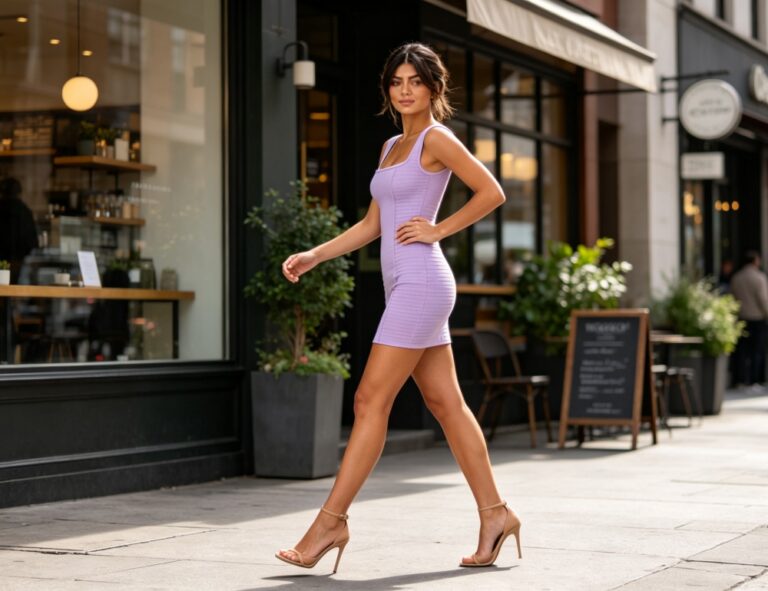
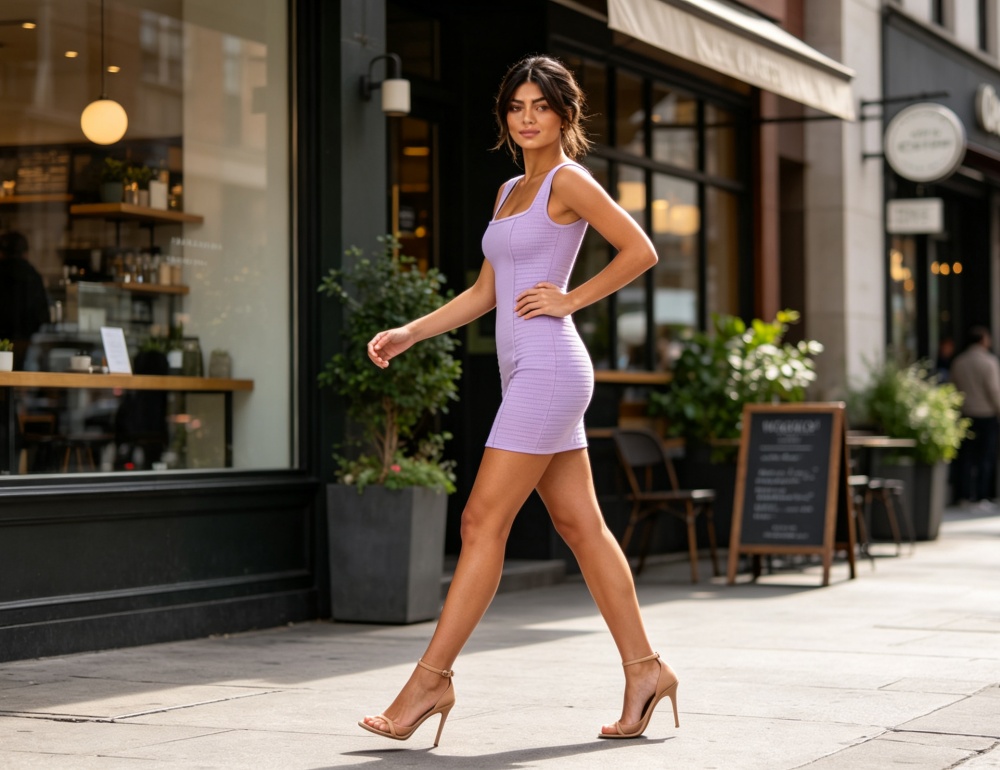
A close fit makes fabric behavior part of the garment’s shape. The lilac sleeveless bandage dress from Kaou You Apparel has a body-skimming silhouette with structured stretch bandage knit options. Those options can be selected around recovery, compression feel and hand feel; specific performance values still need confirmation for the chosen fabric.
The point of comparing swatches is to identify the behavior wanted in the garment. Describe how the dress should feel at the bust, waist and hip, and how it should settle after movement. Avoid choosing the largest extension figure merely because it sounds more flexible.
Negative ease means a garment measurement is smaller than the corresponding body measurement. Stretch can make that relationship usable, but the appropriate amount depends on the fabric, garment construction and intended fit. A 20% swatch extension does not automatically justify reducing every pattern measurement by 20%.
The following questions help connect fabric observations to fitting work. They are development prompts rather than universal acceptance limits.
| Observation |
Question for the sample review |
| Easy crosswise extension |
Does the garment still give the intended support? |
| Strong resistance to extension |
Is the fitted feel comfortable during movement? |
| Length remains after release |
Does the sample settle back after sitting? |
| Different behavior by direction |
Is the fabric orientation appropriate for the pattern? |
Necklines and seams need a garment check
A swatch cannot reproduce every part of a dress. Seams, lining and openings are part of the assembled garment, so include them in the fit review. Observe where the wearer feels restriction and where the garment moves away from its intended position. Record the location rather than rejecting a fabric with a vague “too tight.”
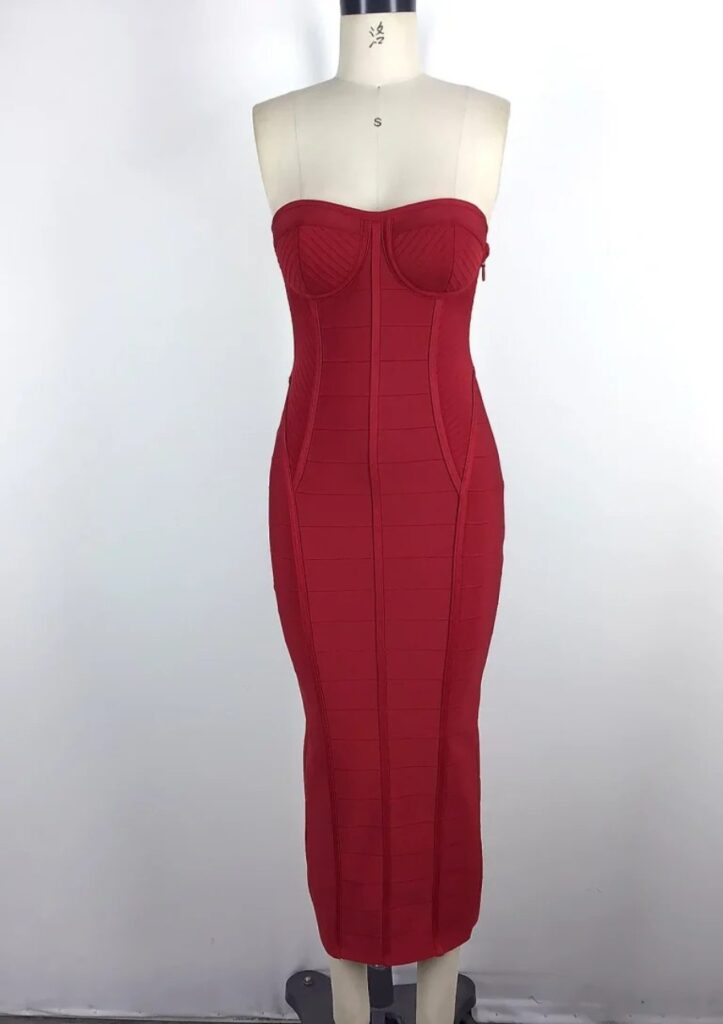
A strapless shape makes the upper edge especially relevant to that discussion. The red strapless bandage midi dress combines a strapless neckline with a structured bandage fit. Review the chosen fabric and neckline construction together instead of assuming that a high stretch value will settle the support question.
Fit observations should distinguish fabric behavior from measurement problems. If the sample shifts, check its measurements and construction before changing the fabric specification. Otherwise, a fabric change may hide the original issue while creating a different feel elsewhere in the dress.
A useful stretch and recovery comparison
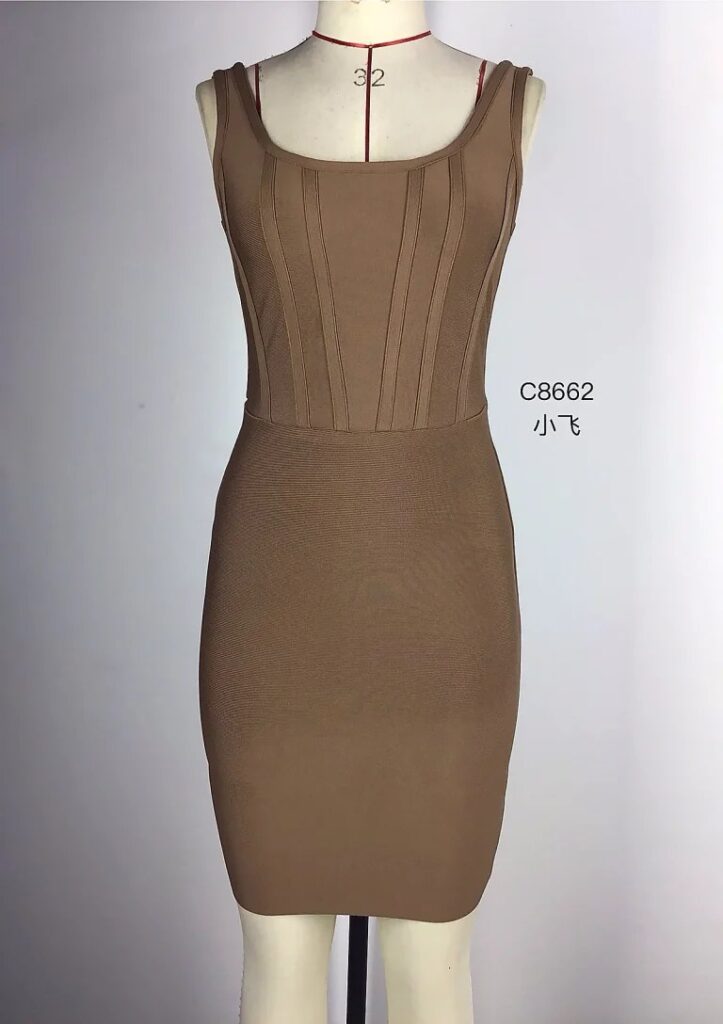
A consistent comparison is more valuable than a collection of unrelated percentages. For a mocha square neck bodycon dress, fabric composition, weight, recovery, compression level and hand feel can be selected for development. Keep the approved fabric reference connected to the sample being evaluated.
Use a short record for each candidate:
- Identify the swatch and the garment sample it belongs to.
- Record extension direction and the measurement procedure.
- Record the recovery interval and remaining growth.
- Note fit observations in standing, sitting and walking.
- Repeat the agreed checks after the intended care treatment.
A care check should use the proposed treatment for the actual fabric. Final care guidance for these dresses depends on fabric confirmation. Do not carry a care instruction or a performance result from an earlier fabric into a revised version without reviewing whether it still applies.
Laboratory testing becomes useful when a result must be reproducible between parties. Select the method and acceptance criteria with a qualified laboratory for the fabric and intended use. Naming a test standard in a development brief does not establish that the garment has passed it.
A clearer way to approve fitted fabric
With fabric stretch and recovery explained, the next step is to assess the actual dress. Record extension, remaining growth and fitting observations separately, then keep the approved fabric connected to the pattern. The aim is a shape and feel the team can describe and check again.
If you are comparing bandage fabric options, discuss your fitted dress requirements with Kaou You Apparel using the intended silhouette and the behavior you want after movement.
FAQ
How do you measure fabric stretch for clothing?
Measure a marked length before and during extension, then calculate the increase as a percentage of the original length. Record direction and the procedure used. For a formal comparison, use an agreed test method rather than treating an unmeasured hand pull as a laboratory result.
Is stretch percentage the same as elastane percentage?
No. Elastane percentage describes composition. Stretch percentage describes extension under particular conditions. Construction and yarn characteristics also affect behavior, so two fabrics with the same listed elastane content should still be assessed individually for the intended dress.
What is a good fabric recovery result?
There is no single result that approves every fitted dress. Set the requirement for the fabric, method and intended fit, then assess the assembled sample. Include the recovery interval and calculation so a reported number can be interpreted correctly.
Does four-way stretch guarantee a better fit?
Four-way stretch describes extension in both fabric directions. It does not guarantee equal extension, a particular recovery value or suitability for the pattern. Compare the actual behavior with the shape and movement required from the finished dress.
Should the sample be checked after washing?
Include the intended care treatment in the development review and repeat the agreed measurements afterward. Keep that observation separate from the initial result. Use the confirmed fabric and proposed care conditions so the comparison belongs to the garment being approved.